 aaa
aaa
With its centuries-old walls and storied past, Oxford Castle & Prison has long been a beacon for ghost enthusiasts and history buffs alike.
The tradition of telling ghost stories at Christmas dates back to the Victorian era, though its roots stretch much further. It may seem odd given the festive cheer associated with Christmas, but the long, cold winter nights provided the ideal setting for tales of the supernatural.
With its centuries-old walls and storied past, Oxford Castle & Prison has long been a beacon for ghost enthusiasts and history buffs alike. From its Norman Conquest origins to its transformation into a prison, it has witnessed many unexplained events and maintains a secretive and sometimes unsettling atmosphere to this day…
Long before Charles Dickens put pen to paper, earlier cultures marked the darkest days of the year with tales of spirits, gods, and otherworldly visitors. To trace back the origins of this tradition, we must go further back in time.
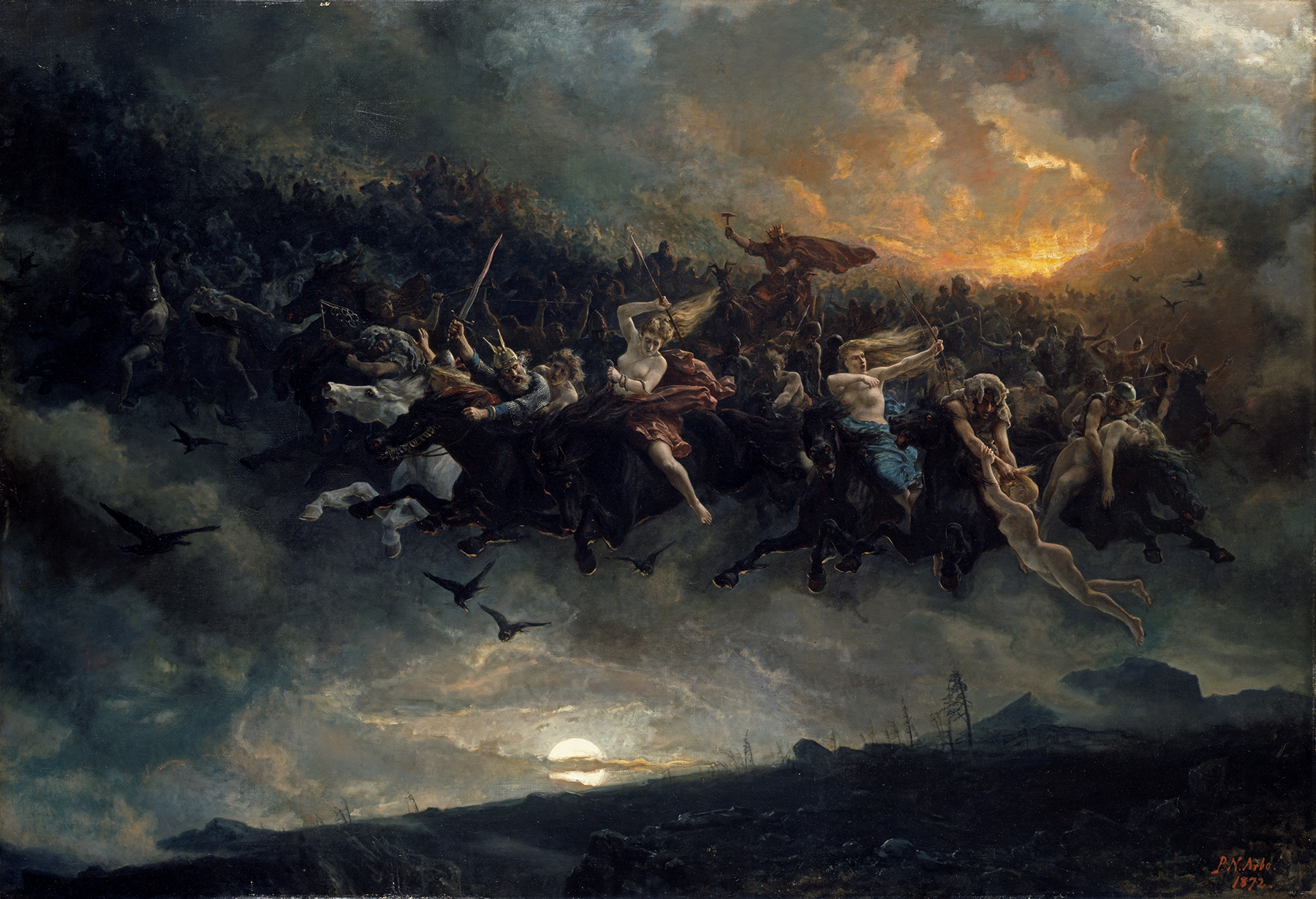
December brings the longest nights of the year, and for the Vikings, this time known as the Winter Solstice held deep significance. It was thought that the spirits of the dead most commonly crossed into the human realm during the winter solstice.
It marked the time for the Wild Hunt, when Odin rode across the night sky accompanied by a band of elves, gods and souls. This period was known as Yol (Yule pronounced “Jul”) and is the origin of our concept of Yuletide. Did you know that the Twelve Days of Christmas actually correspond to the days of Yol?[1]
Historians also believe that Odin was the early inspiration of Santa Claus, also known as Father Christmas. Just picture a mystical, bearded man travelling through the winter night with elves (and spirits) in tow.
Not all spirits were nice, however. For Vikings, the custom of bringing mistletoe into the home was to protect against evil spirits. Evergreen plants were also treated with caution, because they believed forest spirits inhabited them. By the twelfth day of Christmas, households were advised to remove any greenery to avoid the spirits becoming vengeful.
Nordic traditions are thought to have influenced early Medieval England’s religious festivals and practices following their raids and settling here from the 10th Century.
We may never know everything about medieval England thanks to the limited surviving documents, but what we do know is still intriguing, and Christmas traditions are no exception.
For instance, Yule frequently appears in pagan midwinter festivals where storytelling, death, and the supernatural were significant themes. During the darkest season, these gatherings offered warmth, community, and a chance to share tales during the darkest time of year—a notion perhaps influenced by Nordic customs.
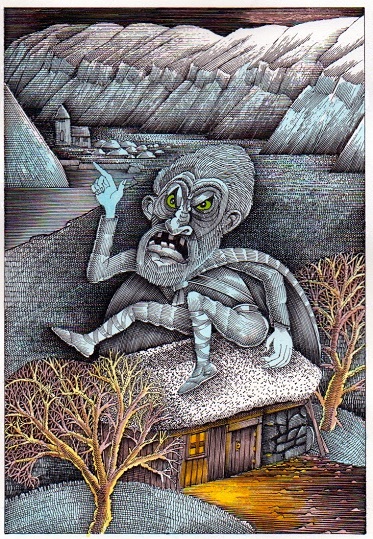
Christmas-associated supernatural themes can also be found in Medieval literature. Monster and Yuletide hauntings were common in stories. The saga of Glámr, an undead Swedish herdsman who disregards Christmas customs and turns into a restless spirit, is just one example of this.[2]
At the time of the Tudor reign, Christmas celebrations were still deeply religious, but more relaxed and joyous where drinking, singing and partying activities took place.
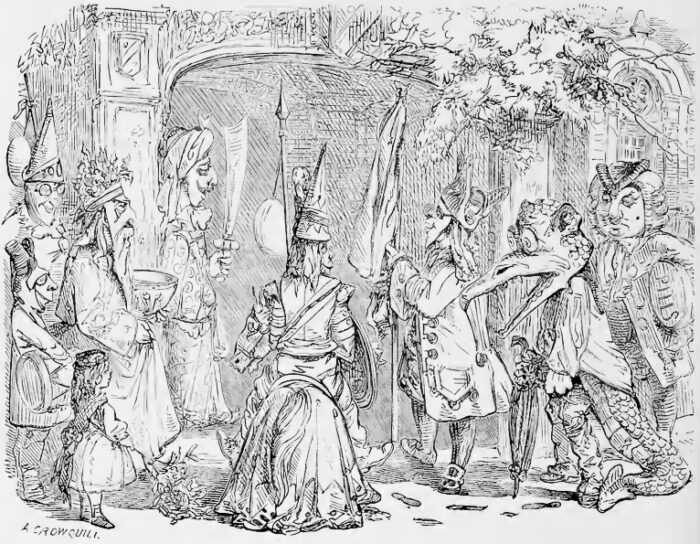
During this period, festive entertainment often included mumming plays.[3] These were lively, humorous, and sometimes lewd street theatre involving dance and music, rooted in folklore and legend. Very similar to today’s English pantomime, they were cheeky, energetic performances inspired by well-known tales.
Fireside ghost stories on Christmas Eve had also become a well-established tradition. Dark winter evenings made the perfect setting for eerie tales, and folk believed that the veil between the living and the dead was at its thinnest during the winter solstice, allowing spirits to walk the earth.
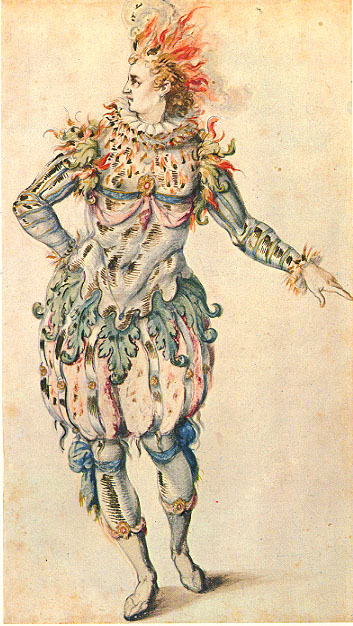
The Stuarts were similar to their cousins, the Tudors, in their style of celebrations before the English Civil War. Both the rich and poor celebrated, and the wealthy were encouraged to share their fortune with the poor, including their food. Their most famous holiday tradition was the Christmas masque, much like the mumming plays.
A masque was a performance combining opera, theatre and ballet, featuring figures from history, legend and the supernatural. In fact, King James I was known for his elaborate masques, which included special effects, intricate costumes and moving scenery. They even built a banqueting house specifically for masque performances at Whitehall Palace in 1608.[5]
Robert Burton, in The Anatomy of Melancholy (1621), lists ghostly tales among the popular winter pastimes, alongside dancing, riddles, card games and Christmas festivities.[6] Shakespeare also tied winter to the supernatural in some of his plays, including The Winter’s Tale.
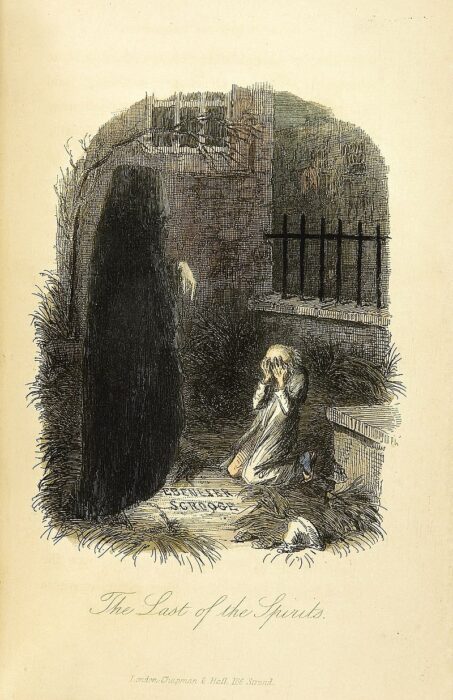
During the Victorian era, Christmas was a time for family gatherings around the hearth, where storytelling was a common pastime. Ghost stories, with their elements of danger and the supernatural, were a natural fit for these gatherings, offering a thrilling contrast to the warmth and safety of the home.
Although the Victorians were famously fascinated by ghosts and the paranormal, the association between Christmas and the supernatural long predated them. Still, the era produced some of the most well-known Christmas ghost stories.
Charles Dickens’ 1843 tale A Christmas Carol left a lasting mark on the tradition, while M. R. James’ ghost stories for Christmas further cemented ghostly tales as a seasonal staple.
Dickens had reportedly written it in less than six weeks, due to financial pressures, often taking long nighttime walks around London while writing. When he finally published it on 19th December, the book was such a success that it was sold out by Christmas Eve.[7]
Montague Rhodes James was though less familiar to the public, is regarded as a pioneer of the modern ghost story today. While a medieval scholar at Kings College Cambridge, he composed winter ghost stories for his students and colleagues that he would read to them under candlelight. Later on, he started publishing his stories in magazines, then as literary books.[8] Given his knowledge of medieval literature, legends and folklore, perhaps this also inspired his stories.
Both authors’ influence continues to inspire countless writers, directors and artists today.
The tradition of telling ghost stories at Christmas gradually waned in the 20th century, overshadowed by the commercialisation of the holiday and changing social norms. However, there has been a recent revival of interest, with many people rediscovering the charm and excitement of these tales as a unique way to celebrate the holiday season.
Ghost stories still remain a beloved part of Christmas culture today. Modern interpretations often combine elements of horror with the festive spirit, creating a unique genre of seasonal storytelling. Television adaptations, literary tributes, and themed events keep the tradition alive and evolving. continue to draw inspiration from or reinterpret these spooky midwinter tales.
If you’re interested in reading a Christmas ghost story this December, you can find a selection available in our gift shop.
The relationship between Christmas and ghost stories has existed for a very long time and is a reminder of the holiday’s rich and varied history. It offers a different way to celebrate, which honours the past and gives depth to the modern Christmas experience. Whether through classic tales or new interpretations, these stories continue to captivate and enchant, proving that the spirit of the season can be both heartwarming and haunting.
Last Updated: 12th December 2026
[1] “How the Vikings gave us Christmas | Sky HISTORY TV Channel.” Accessed November 25, 2025. https://www.history.co.uk/articles/how-the-vikings-gave-us-christmas.
[2] Yuletide Monsters: Christmas Hauntings in Medieval Literature and ….” Accessed December 5, 2025. https://sites.nd.edu/manuscript-studies/2020/12/25/yuletide-monsters-christmas-hauntings-in-medieval-literature-and-modern-popular-culture.
[3] “The Twelve Days of Christmas | English Heritage.” Accessed December 5, 2025. https://www.english-heritage.org.uk/members-area/kids/kids-tudors/twelve-days-of-christmas.
[4] “How Did The Tudors Celebrate Christmas? 24 Facts | HistoryExtra.” https://www.historyextra.com/period/tudor/alison-weir-tudor-christmas-history-advent-calendar-festive-facts-siobhan-clarke.
[5] “History Bite: Tudor and Stuart Christmas Traditions | An Historian ….” Accessed December 5, 2025. https://anhistorianabouttown.com/tudor-and-stuart-christmas-traditions.
[6] Burton, Robert. The Anatomy of Melancholy. Oxford, 1621.
[7] “Ten Things To Know About Charles Dickens’ A Christmas Carol ….” Accessed December 11, 2025. https://www.arts.gov/stories/blog/2020/ten-things-know-about-charles-dickens-christmas-carol.
[8]“Rise of ‘Jamesian’ Ghost Stories: Who Was M.R. James ….” https://www.thecollector.com/ghost-stories-who-was-montage-rhodes-james.


Oxford Castle & Prison
44-46 Oxford Castle, Oxford OX1 1AY
Heritage Projects (Oxford Castle) Ltd
Registered in England No: 5763243
Registered Office: St. Edmund's House, Margaret Street, YORK, YO10 4UX





| Cookie | Duration | Description |
|---|---|---|
| cookielawinfo-checkbox-advertisement | 1 year | Set by the GDPR Cookie Consent plugin, this cookie is used to record the user consent for the cookies in the "Advertisement" category . |
| cookielawinfo-checkbox-analytics | 11 months | This cookie is set by GDPR Cookie Consent plugin. The cookie is used to store the user consent for the cookies in the category "Analytics". |
| cookielawinfo-checkbox-functional | 11 months | The cookie is set by GDPR cookie consent to record the user consent for the cookies in the category "Functional". |
| cookielawinfo-checkbox-necessary | 11 months | This cookie is set by GDPR Cookie Consent plugin. The cookies is used to store the user consent for the cookies in the category "Necessary". |
| cookielawinfo-checkbox-others | 11 months | This cookie is set by GDPR Cookie Consent plugin. The cookie is used to store the user consent for the cookies in the category "Other. |
| cookielawinfo-checkbox-performance | 11 months | This cookie is set by GDPR Cookie Consent plugin. The cookie is used to store the user consent for the cookies in the category "Performance". |
| PHPSESSID | session | This cookie is native to PHP applications. The cookie is used to store and identify a users' unique session ID for the purpose of managing user session on the website. The cookie is a session cookies and is deleted when all the browser windows are closed. |
| viewed_cookie_policy | 11 months | The cookie is set by the GDPR Cookie Consent plugin and is used to store whether or not user has consented to the use of cookies. It does not store any personal data. |
| Cookie | Duration | Description |
|---|---|---|
| _ga | 2 years | The _ga cookie, installed by Google Analytics, calculates visitor, session and campaign data and also keeps track of site usage for the site's analytics report. The cookie stores information anonymously and assigns a randomly generated number to recognize unique visitors. |
| _gat_UA-9822230-4 | 1 minute | A variation of the _gat cookie set by Google Analytics and Google Tag Manager to allow website owners to track visitor behaviour and measure site performance. The pattern element in the name contains the unique identity number of the account or website it relates to. |
| _gcl_au | 3 months | Provided by Google Tag Manager to experiment advertisement efficiency of websites using their services. |
| _gid | 1 day | Installed by Google Analytics, _gid cookie stores information on how visitors use a website, while also creating an analytics report of the website's performance. Some of the data that are collected include the number of visitors, their source, and the pages they visit anonymously. |
| CONSENT | 2 years | YouTube sets this cookie via embedded youtube-videos and registers anonymous statistical data. |
| Cookie | Duration | Description |
|---|---|---|
| _fbp | 3 months | This cookie is set by Facebook to display advertisements when either on Facebook or on a digital platform powered by Facebook advertising, after visiting the website. |
| fr | 3 months | Facebook sets this cookie to show relevant advertisements to users by tracking user behaviour across the web, on sites that have Facebook pixel or Facebook social plugin. |
| test_cookie | 15 minutes | The test_cookie is set by doubleclick.net and is used to determine if the user's browser supports cookies. |
| VISITOR_INFO1_LIVE | 5 months 27 days | A cookie set by YouTube to measure bandwidth that determines whether the user gets the new or old player interface. |
| YSC | session | YSC cookie is set by Youtube and is used to track the views of embedded videos on Youtube pages. |
| yt-remote-connected-devices | never | YouTube sets this cookie to store the video preferences of the user using embedded YouTube video. |
| yt-remote-device-id | never | YouTube sets this cookie to store the video preferences of the user using embedded YouTube video. |